Not sure when your dog needs its next shot? You’re not alone. Vaccine timing can feel confusing, especially with a new puppy. Puppies usually need a series of vaccines over several weeks, and adult dogs may need boosters later on. A clear dog vaccination schedule makes it easier to stay on track and helps you plan vet visits with confidence. This guide explains which shots your dog needs and when, what core and non-core vaccines mean, what to do after a missed dose, and how to handle aftercare.
Why Is a Dog Vaccination Schedule Important?
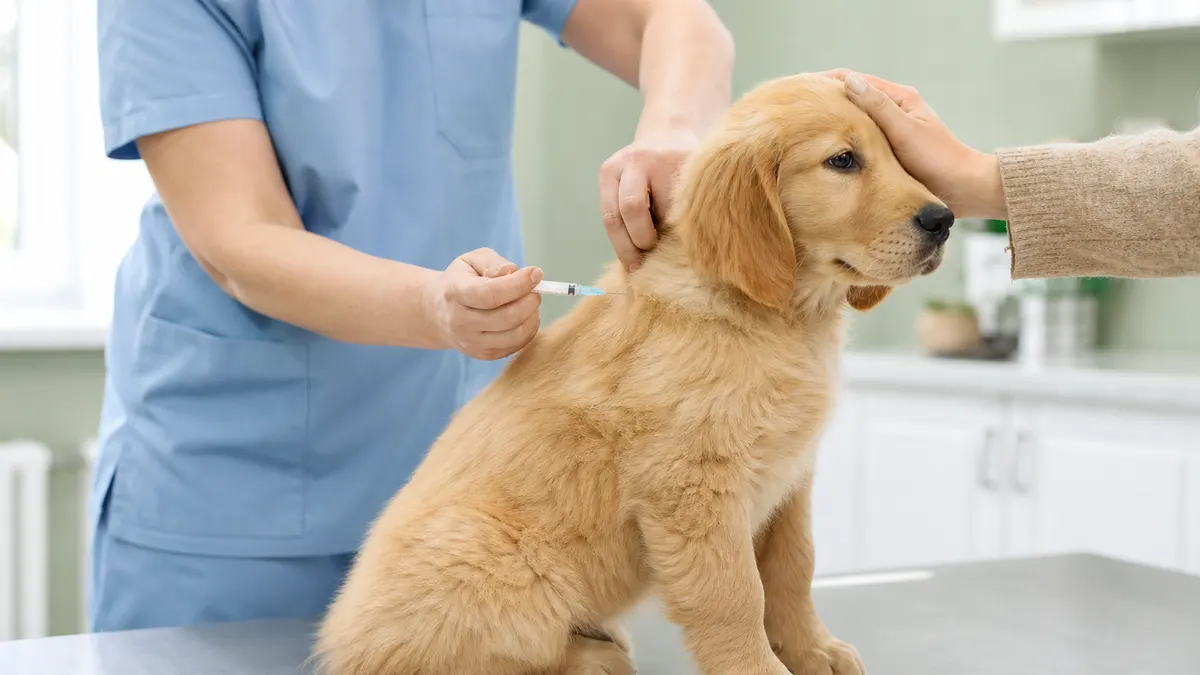
Vaccines teach your dog’s immune system to recognize certain germs. If your dog meets one later, the body can respond faster. Vaccines lower the risk of serious illness, but no vaccine protects every dog every time.
Some diseases are very serious. Rabies is almost always fatal and can spread to people. Distemper attacks the lungs, gut, and nervous system. Parvovirus causes severe vomiting and diarrhea, especially in puppies. A veterinarian-recommended schedule helps protect your dog and, for diseases like rabies, other animals and people too. Our pet vaccination basics page explains more.
Puppy Vaccination Schedule by Age
Puppies get shots in a series because antibodies from their mother can block early vaccines. These antibodies fade at different times in each puppy. Repeat doses help make sure protection starts as early as possible.
Core puppy vaccines generally begin at about 6–8 weeks and repeat every 2–4 weeks. The final puppy dose is given at 16 weeks or older. Some higher-risk puppies need a later final dose.
| Puppy age | Typical vaccination stage | What owners should know |
|---|---|---|
| 6–8 weeks | First DHPP dose | DHPP is a combination shot against distemper, hepatitis (adenovirus), parvovirus, and parainfluenza. |
| 10–12 weeks | Second DHPP dose | Leptospirosis may start now if recommended in your area. It needs a second dose 2–4 weeks later. |
| 14–16 weeks | Third DHPP dose | Rabies may be given around now, depending on local law and the vaccine product. |
| 16 weeks and older | Extra dose, when indicated | Higher-risk puppies may need a later final dose. Your vet decides. |
| Around 6 months | Follow-up core dose | Current guidance suggests considering this dose to cover puppies that did not respond earlier. |
This table is a general guide, not one schedule for every dog. Your veterinarian will confirm your puppy’s plan. Rabies timing follows local law, and leptospirosis or Bordetella shots depend on region and lifestyle. You can also read our puppy vaccine information before your visit.
Core vs. Non-Core Dog Vaccines
Core vaccines are recommended for all dogs because the diseases are serious and widespread. Non-core vaccines depend on where your dog lives and what your dog does.
Core vaccines for dogs
- Distemper, adenovirus, and parvovirus: These protect against canine distemper, infectious canine hepatitis, and parvovirus. They are usually combined in the DHPP vaccine for dogs.
- Rabies: This protects against a fatal virus. It is core where rabies is common or the law requires it.
- Leptospirosis: This protects against bacteria spread through contaminated water and wildlife urine. WSAVA treats it as core where the disease is common and suitable vaccines exist.
Non-core dog vaccines
- Bordetella: Helps protect against kennel cough.
- Canine influenza: Helps protect against dog flu.
- Lyme disease: Helps protect against a tick-borne infection.
Boarding, daycare, group classes, travel, and outdoor activities can change your dog’s risk. No dog needs every vaccine everywhere, so ask your vet which ones fit.
Vaccination Schedule for Adult and Senior Dogs
An adult dog vaccination schedule depends on puppy history, past boosters, health, lifestyle, and local rules. After the puppy series, some core vaccines may be boosted every three years or longer. Rabies follows local law and the vaccine label. Leptospirosis and some lifestyle vaccines, such as Bordetella, often need yearly boosters.
Senior dogs do not stop needing protection because of age. Your veterinarian can review their health, vaccine history, and exposure risk to decide what still helps. Regular wellness exams matter at this age too, because they catch problems early.
What If Your Dog Misses a Vaccine?
Don’t panic. Missed dog vaccinations are common and can be sorted out.
- Check your dog’s vaccination record or call the previous clinic.
- Book a visit so your vet can review the history.
- Don’t restart the whole series or repeat every vaccine on your own.
An overdue or unvaccinated adult dog may need a catch-up plan. Your vet will base it on records, vaccine products, and local rules.
Dog Vaccine Side Effects and Aftercare
Mild tiredness, a sore injection spot, or a slight drop in appetite can happen after shots. Watch your dog, and call your vet if signs last, get worse, or worry you.
Seek immediate veterinary care for difficulty breathing, facial swelling, collapse, or repeated vomiting. Don’t treat a serious reaction at home or give human medicine without veterinary guidance.
How to Keep Your Dog’s Vaccines Up to Date
- Keep dog vaccination records, on paper or digitally.
- Save the next due date after each visit.
- Bring previous records when adopting a dog or changing clinics.
- Discuss boarding, travel, outdoor exposure, and local disease risks with your vet.
Help Your Dog Stay Protected
The best dog vaccination schedule depends on your dog’s age, vaccine history, health, lifestyle, and local risks. With a little planning, staying on track is simple. If you have questions, talk with Bridgewater Veterinary Hospital about vaccination and preventive care for your dog.
Frequently Asked Questions
At what age should puppies get their first shots?
Most puppies start core vaccines at about 6–8 weeks old. Your veterinarian sets the exact timing based on your puppy’s health and local risks.
How often do adult dogs need vaccine boosters?
It varies. Some core vaccines may be boosted every three years or longer. Rabies follows local law, and leptospirosis is often yearly. Your vet will personalize the plan.
Which vaccines are essential for dogs?
Distemper, adenovirus, and parvovirus are core, plus rabies where required or common. Leptospirosis is core in high-risk regions. Others depend on lifestyle and location.
What happens if my dog misses a vaccination?
Your dog may have less protection for a while. Contact your vet, share any records, and follow their catch-up advice instead of guessing.
Do indoor dogs still need vaccinations?
Usually, yes. Indoor dogs can meet germs through visits, grooming, boarding, or other pets, and rabies laws often apply regardless. Your vet can assess risk.
How long should I monitor my dog after vaccination?
Watch closely for the first several hours and stay alert for the next day. Call your vet if mild signs last or worsen, and seek urgent care for serious signs.